Read Time: 5 minutes
From Tree Bark to Woven Cotton
Learning to Make Cotton Cloth
Later, the Tiv learned about cotton from the Uke, whom the account identifies as the Ugenyi.
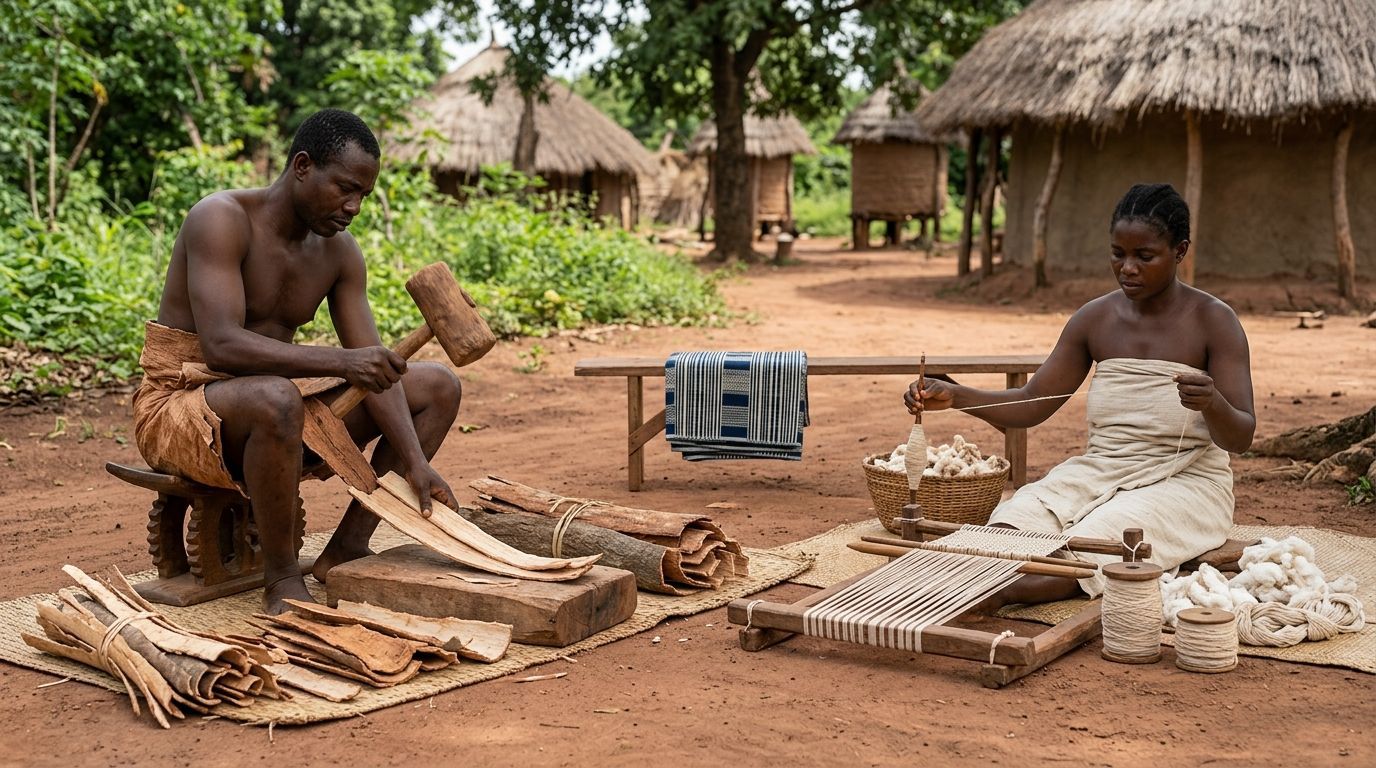
The Tiv first taught themselves how to spin cotton into thread. They did not succeed immediately, but they continued trying until they learned how to do it well.
They then learned how to make woven cloth. The historical account says that an outsider eventually taught them the skill of weaving. It also records that the Tiv first learned cloth weaving from the Abakwa people.
At first, Tiv weavers made cloth in narrow strips called ibôr. Cloth made for women was called ibôrkuma, although men also used it.
At this time, children who had not been circumcised were still described as going naked.
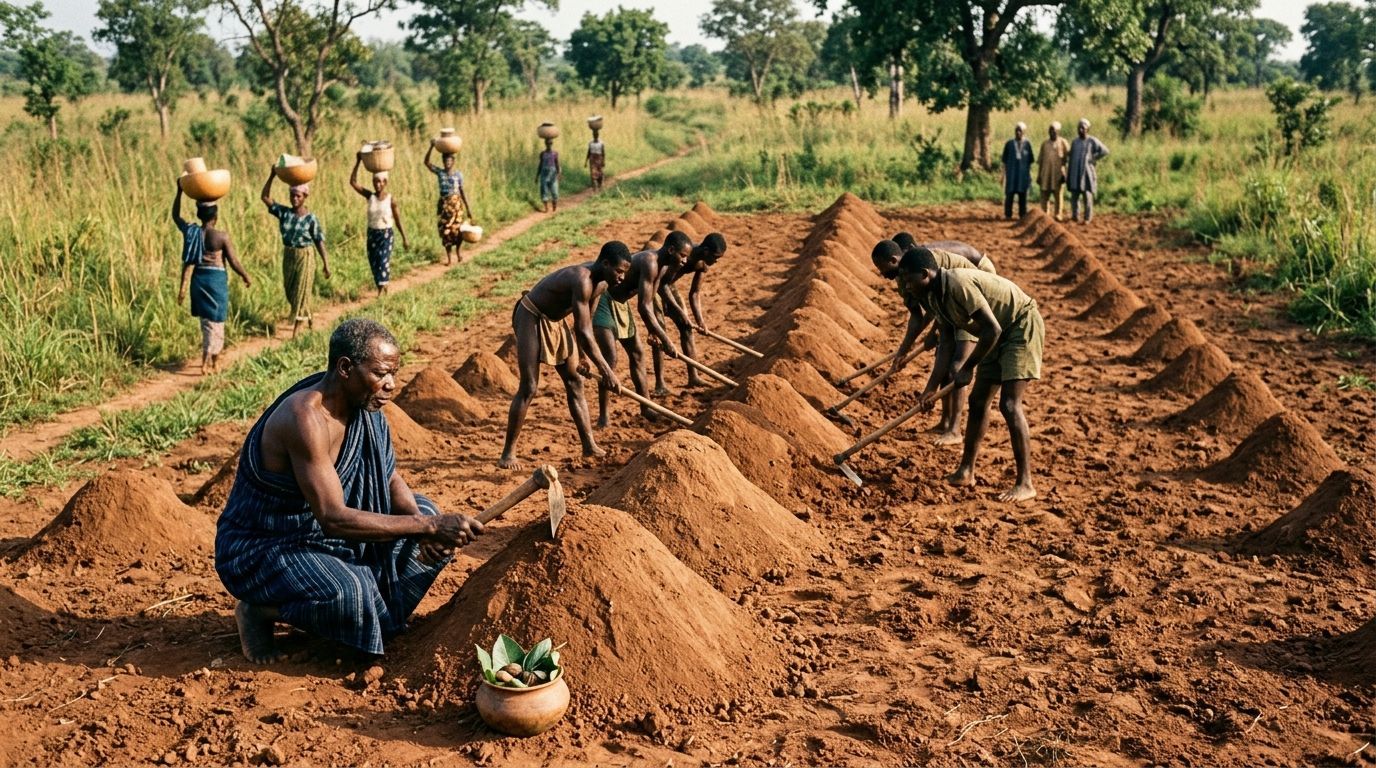
The Tiv did not grow their own cotton at first. They bought it from elsewhere. Later, they learned to grow cotton themselves.
Cotton was planted on the sides of old yam heaps, rather than on top of them. When the cotton was ready, the cotton wool was picked, dried in the sun and stored for spinning.
Preparing Kpagh
Spinning the Thread
The Tiv made two main kinds of thread.
- Dzer was thin and strong.
- Aba was thicker and softer.
Both were useful for weaving. Dzer helped make cloth strong, while aba helped make it smoother and softer.
The Tiv also used a spindle called majir. According to the historical account, the spindle was adapted from a Hausa model called mazari. When the original spindle was difficult to make, the Tiv used substitutes, including a hard yam head or the fruit of the tur tree.
The names dzer, aba and majir also show the influence of Hausa vocabulary and technology on this part of Tiv cloth-making.
The Rise of Woven Tiv Cloth
As weaving developed, the Tiv produced many different types of cloth.
One important cloth was
tugudu. It was made by joining narrow strips of woven cloth together. Another type was
puweikondo, a name connected with “twenty strips”.
There were also other forms of cloth, including
akpem,
bente,
ange'r,
dzaan,
abeba and
gere. Some were plain white cloths. Others had stripes, spots or black threads woven into them.
This meant that Tiv clothing was no longer simply about covering the body. Different cloths could also show a person's wealth, age, position or the occasion they were attending.
Some cloths had considerable value. The historical account records examples of tugudu being exchanged for valuable goods, including metal. It also records that a bull could be exchanged for five yards of tugudu, while a female cow could be exchanged for ten yards.
Colour and Imported Cloth
The Tiv also developed ways of giving cloth different colours and patterns.
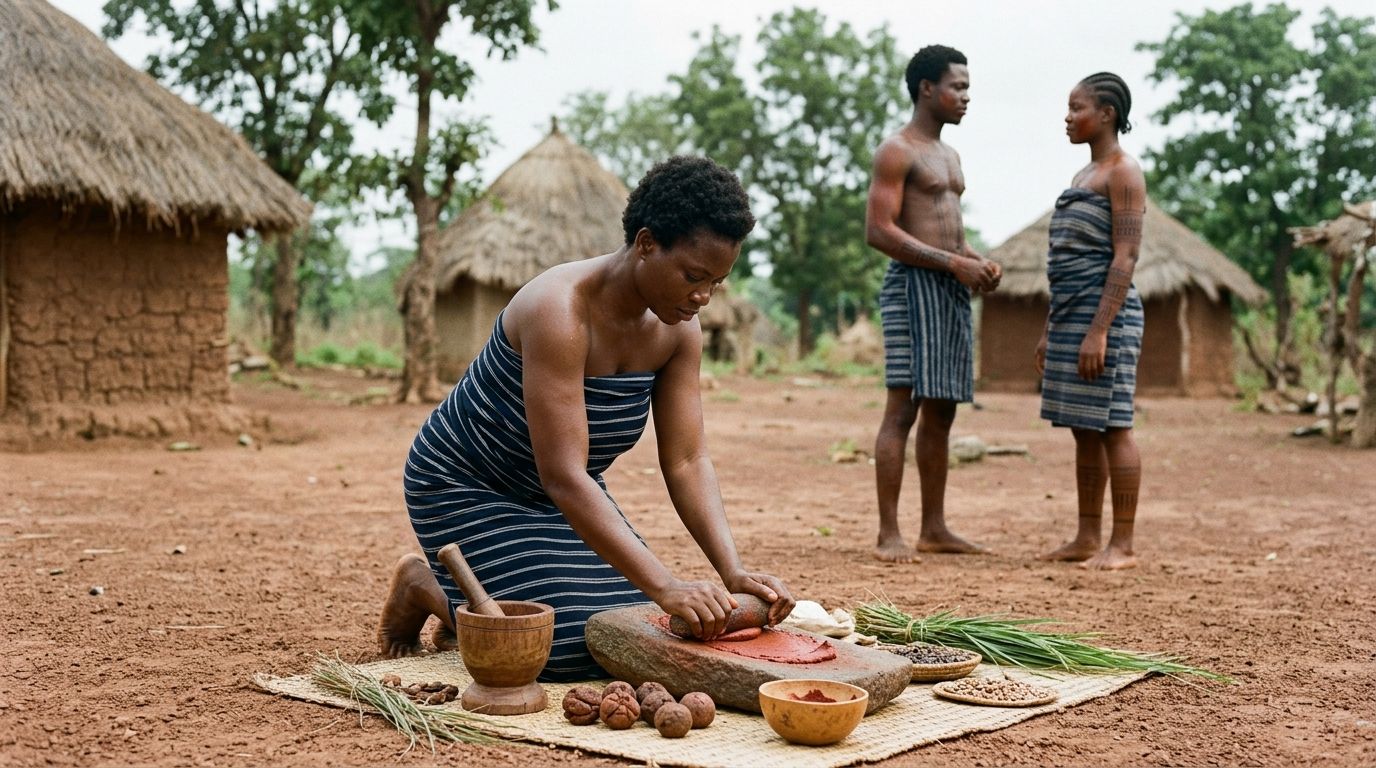
Indigo was used to produce deep blue colours. The dyeing process followed methods associated with the Hausa and involved deep pits and ashes from certain trees. Tiv people also travelled to other places and brought back cloths made by other communities. The
Wukari area, also called
Waka in the account, was one of the places from which they brought back cloth. Examples included
alishi, also called
amua,
swaki and
murfu.
These imported cloths were highly valued. In the period described, nobles mainly wore them, especially on important occasions.
Clothing could therefore become a way of showing wealth and social position. A person wearing a particularly fine or unusual cloth could attract a great deal of attention.
Gowns and Chiefs
The
riga, or gown, became especially associated with chiefs.
The historical account says that the practice of wearing gowns was adopted from the Hausa. Some Tiv people had lived among the Hausa and, when they became chiefs, were dressed in gowns.
Over time, the gown became a recognised form of dress for Tiv chiefs. Wealthy people who were not chiefs could also wear gowns on important occasions.
From tradition to today
Tiv clothing did not remain unchanged. New materials, designs and influences were added over time, while older forms continued to be used in different ways.
The historical account shows that clothing was once closely connected with
work,
age,
wealth,
special occasions and
social position.
The journey from
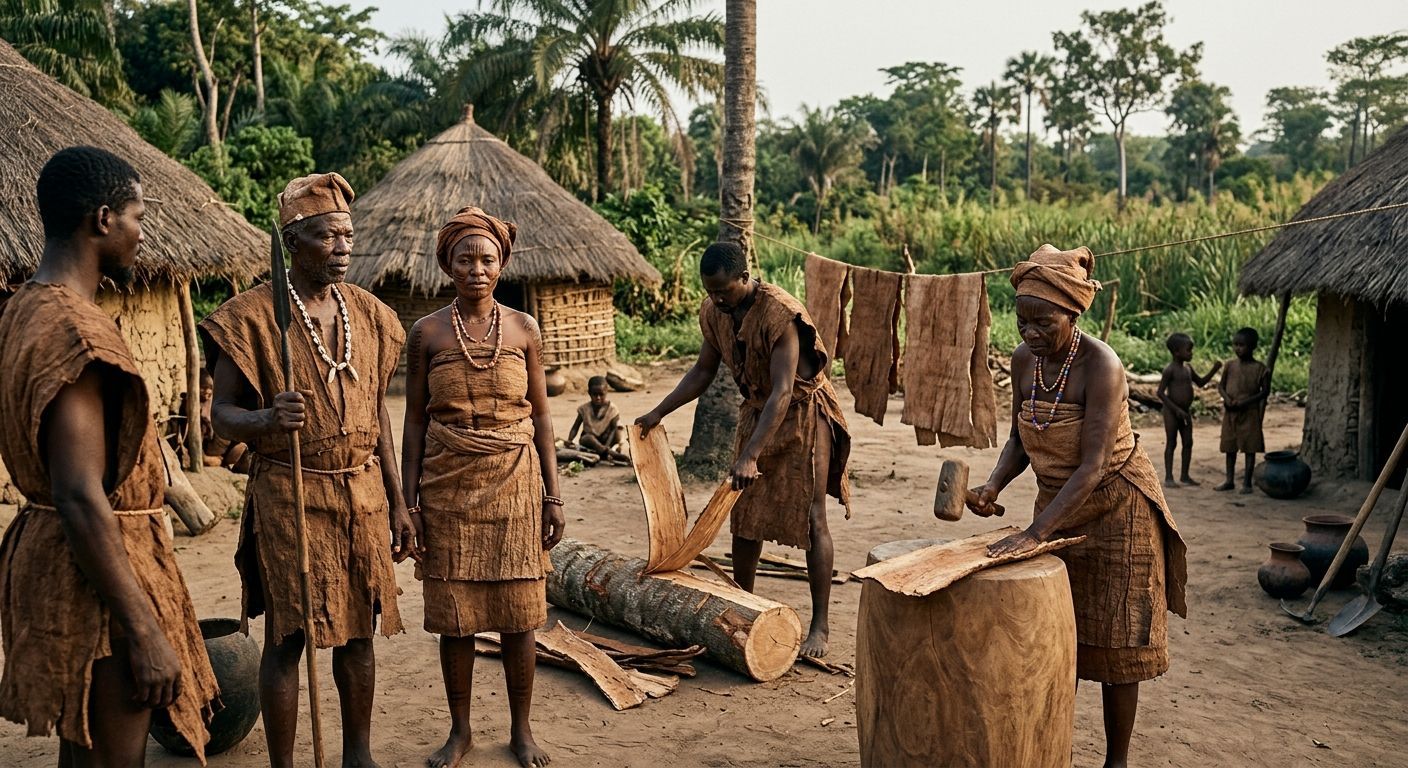
nyagba, made from tree bark, to woven cotton cloth shows how Tiv people learned new skills, adapted ideas from neighbouring peoples and developed their own forms of clothing.
It is also a reminder that culture does not always remain fixed. Tiv clothing changed as people travelled, traded, learned new skills and encountered other communities. Yet through these changes, Tiv people continued to give their own meanings and uses to the clothes they made and wore.