History Articles

Beauty, Courtship and Body Care

September 27, 2026
Read Time: 5 minutes

Personal Adornment & Courtship

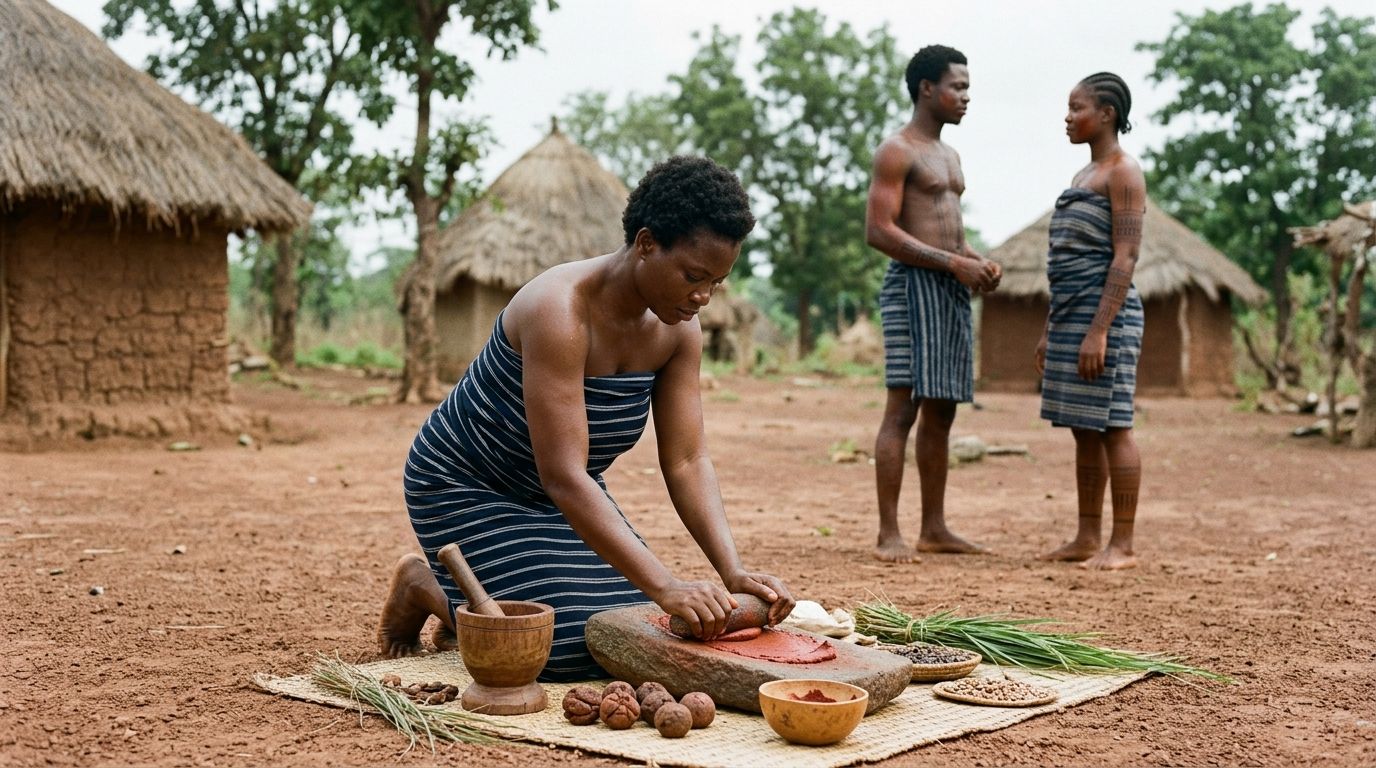
Woman grinding camwood and a young man courting a young lady

Camwood, known as kpagh, comes from a tree. The Tiv learned about its use through contact with the Udam people. The Kparev clan, who lived closest to the Udam, were the first Tiv people to learn about its value as a body lotion.


At first, the Tiv did not know how to prepare the lotion themselves, so they continued to buy the raw camwood from the Udam. The practice later spread across Tivland.


There is also an important part of the story about how the Tiv came to possess the land around them. The Tiv fought and drove out Udam and possessed their land. After this, they saw how the Udam used camwood as an ointment or body lotion.
Beauty and Courtship

Camwood was closely connected with beauty and courtship. Young men and women used it most often, especially when young men were trying to attract women.


A man who regularly used kpagh could be seen as more attractive. In the account, camwood is described as being extremely important to the Tiv — even more important than a Hausa gown.


This shows that kpagh was not simply a form of body care. It could also communicate beauty, attractiveness and social status.


By the time this account was written in the early 20th century, the use of kpagh was changing. Some groups, including the Iharev, Masev and Nôngov, still valued it highly. Other groups were less interested in the wet lotion and preferred the dry powder form.


When young men competed for a girl's attention, the young man who used the dry powder could be preferred. Because young women liked this form, more young men began using it.

Preparing Kpagh

In the traditional process, a man cut the camwood bark into small pieces and gave it to a female relative, such as his wife, mother or sister. She pounded the bark in a mortar and then ground it on a stone until it became a smooth paste. She shaped the paste into balls and left them to dry. 


When they were ready, she returned the balls to the man. He gave her one ball and kept the rest.


To use the kpagh, a small amount of the dried paste was mixed with water in a small calabash. It was worked until it became smooth. The person first rubbed oil over the skin and then applied the camwood all over the body.


The colour of kpagh was red, ranging from bright red to a darker or duller shade.According to the historical account, the Tiv believed that using camwood helped the skin feel comfortable and smooth and kept it free from scabies. This was a historical belief, rather than a medical fact established by modern medicine.

Maa body Marking

Maa refers to several similar wild trees, including aginde, ipwa, asange, maachikor and ibohough. Their fruit was used to make a black pigment or paste for body marking.


Aginde was not common in Tivland and was sometimes brought from Cameroon or eastern Nigeria. The other trees grew locally. Maachikor was known mainly among the Ukum and Shitire clans.


The different types of maa were prepared in a similar way. The fruit was opened and its soft inside was removed. This material was ground on a stone, much like the stone used to prepare camwood. It was then shaped into balls and stored in cotton wool.


To make the marking paste, the maa was mixed with charcoal on a broken piece of pottery. The charcoal, known as bi, was rubbed into the mixture until it became as black as ink.


A skilled body-marker trimmed a feather so that only the shaft remained. The shaft was dipped into the black mixture and used to draw lines and patterns on the person's body.


Skill was important. An artist with a steady hand could create attractive and carefully made designs, while someone whose hand shook would produce poorer results.


Young men and women who cared about their appearance often wore fresh maa markings.

Beauty and self-expression.

In Conclusion

Kpagh and maa were both important forms of personal adornment in the period described by this historical account.

Camwood brought colour, smoothness and fragrance to the body, while maa created black patterns on the skin. Their use was also connected with beauty, courtship and social status.


Altogether, these practices give us a glimpse into how Tiv people expressed ideas about beauty and attractiveness through their bodies. They show that personal appearance was not simply about looking good; it could also be a way of expressing identity, attracting others and taking pride in one's appearance.

Based on authoritative sources, ensuring historical accuracy and cultural integrity.

Share article:

Recommended Articles

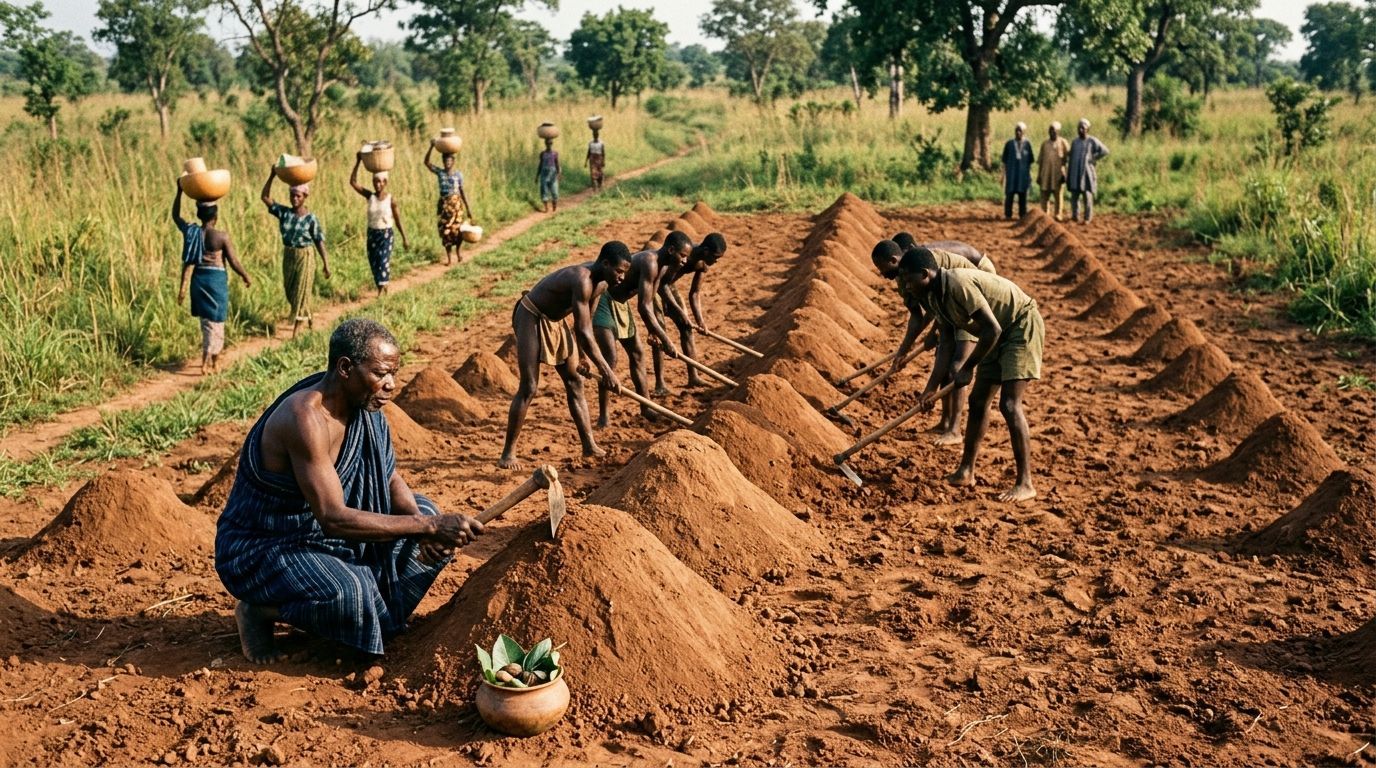
Making yam mounds
September 19, 2026
Learn how Tiv communities traditionally prepared new farmland, made yam mounds, observed farming rituals, and strengthened community bonds around the yam harvest.
Heaped harvested yam pile
May 6, 2026
Yam cultivation, storage, and consumption, with the ceremonies surrounding it and its symbolism.
Some of the things you would find in a mud hut
May 4, 2026
The man builds the home and the woman makes the home, this means, she sets a triangle of three-stone hearth for cooking, the ima, a stand to hold pots, the dipper, etc.