History Articles

Farm Preparation

September 19, 2026

Preparing Fresh Farms and Making Yam Mounds in Tiv Past

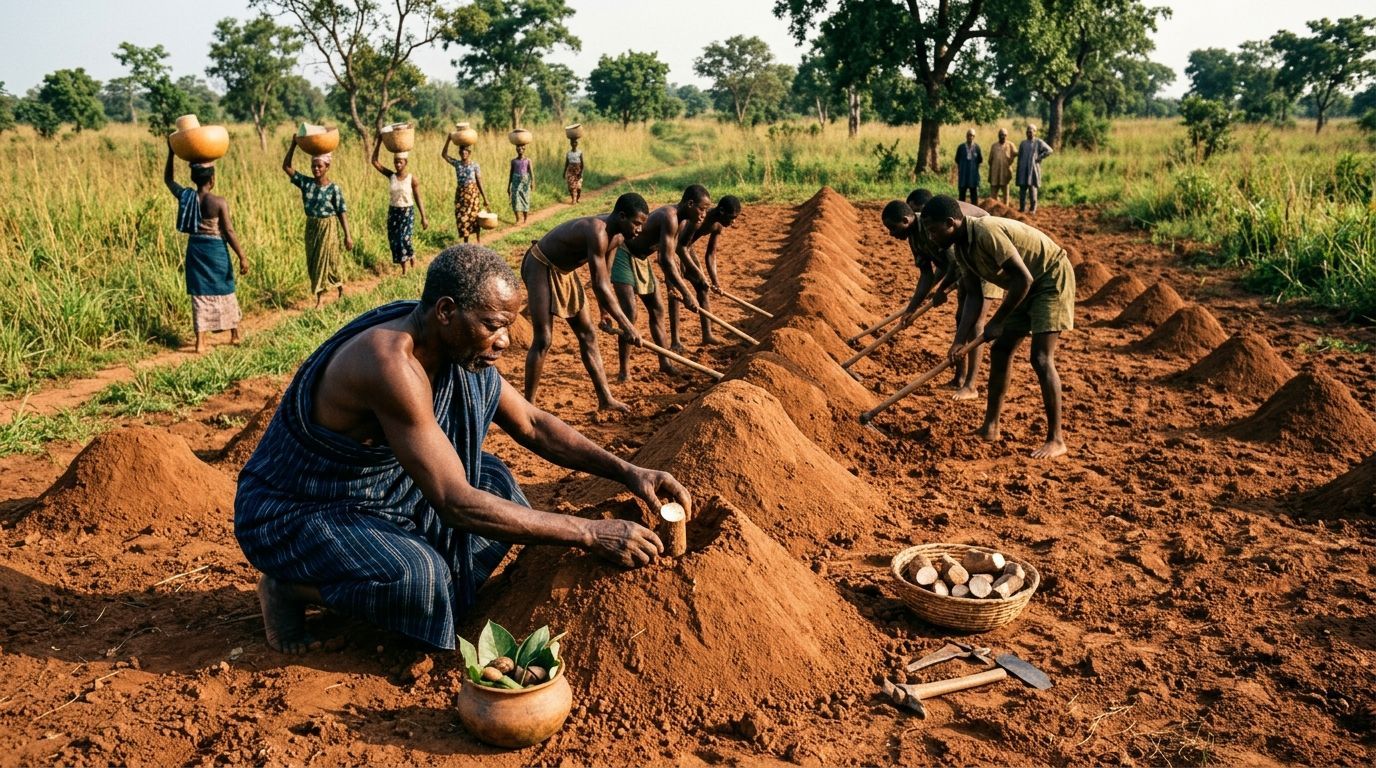
Making yam mounds

Every year the Tiv prepared new farmland, known as ihande huran, usually in October or November during the rainy season. Village elders went out early to select sites, marking boundaries by pulling up handfuls of grass. In the past they kept farms close together for safety against enemies.


Boys used long poles to tread down the grass in lanes, then pulled out the weeds. After a day’s work the farm owner placed an akombo emblem on the land to protect it from witches who might impoverish the soil. 

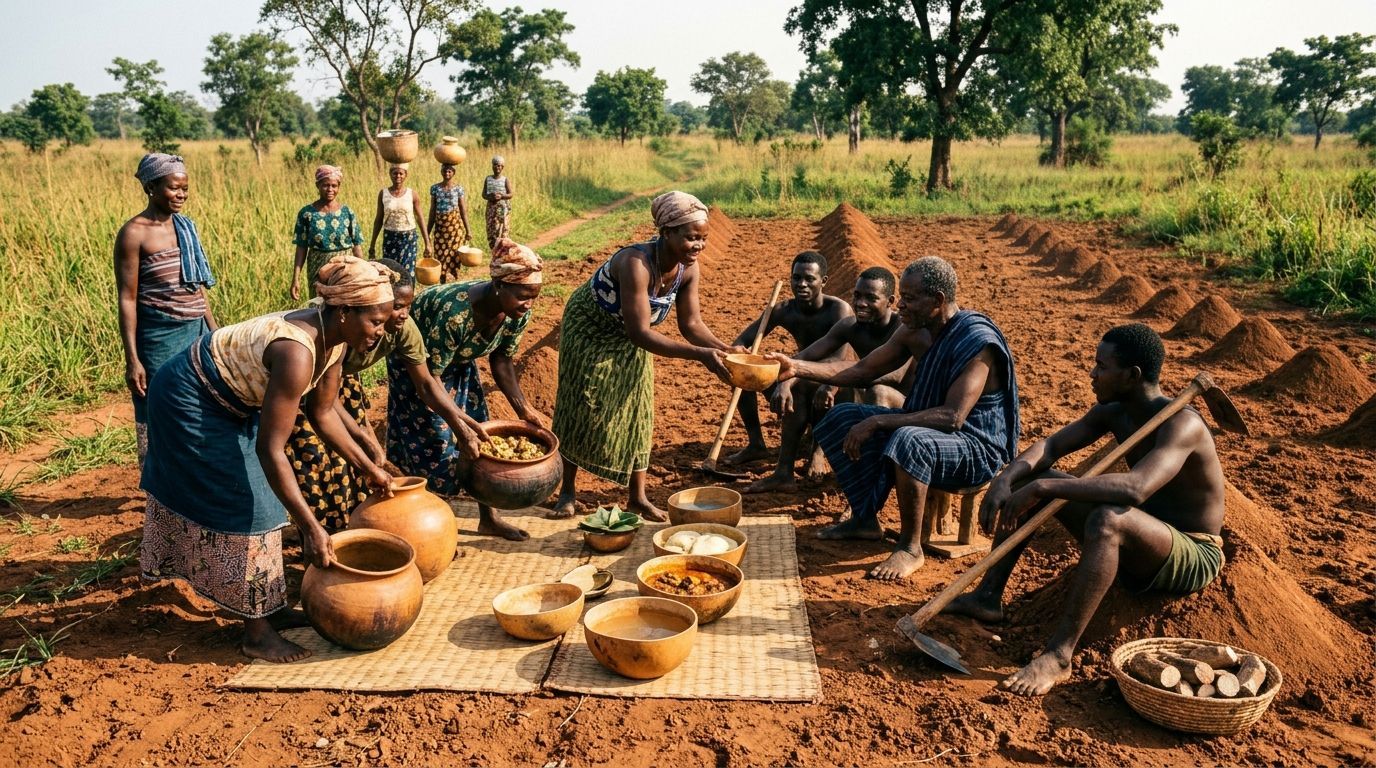
Women ring food at mid-day

Women once helped with clearing but later left the heavy work to men; some would claim illness to avoid it.


Making yam mounds was the most important farming task. The household head inaugurated the farm in silence by building the first mound with a special ritual object (igbende yiase) linked to the twer akombo. Speaking to anyone on the way would transfer the farm’s good fortune. The next day the boys continued energetically.


In the Kparev clan, mounds followed a special pattern: a central line of large mounds called deche, with smaller lines on either side. Kparev farmers also formed mounds with clods of soil, which they considered superior. Helping someone make yam mounds was such a valued act that the Tiv said one could even share “human meat” (a serious debt among the mbatsav) with that person without creating obligation.


Women brought food at midday, and the sight of many heads turned toward the path was a familiar one. These careful, ritual-filled practices ensured fertile land and strong community bonds around the vital yam crop.


Based on authoritative sources, ensuring historical accuracy and cultural integrity.

Share article:

Recommended Articles

Heaped harvested yam pile
May 6, 2026
Yam cultivation, storage, and consumption, with the ceremonies surrounding it and its symbolism.
Some of the things you would find in a mud hut
May 4, 2026
The man builds the home and the woman makes the home, this means, she sets a triangle of three-stone hearth for cooking, the ima, a stand to hold pots, the dipper, etc.
habitation, social structure, settlement, skill
April 27, 2026
Tiv's descendants formed the two major lineages of Ichôngo and Ipusu, who helped establish rules for land ownership, among many other things.