Household Items and Interior Setup
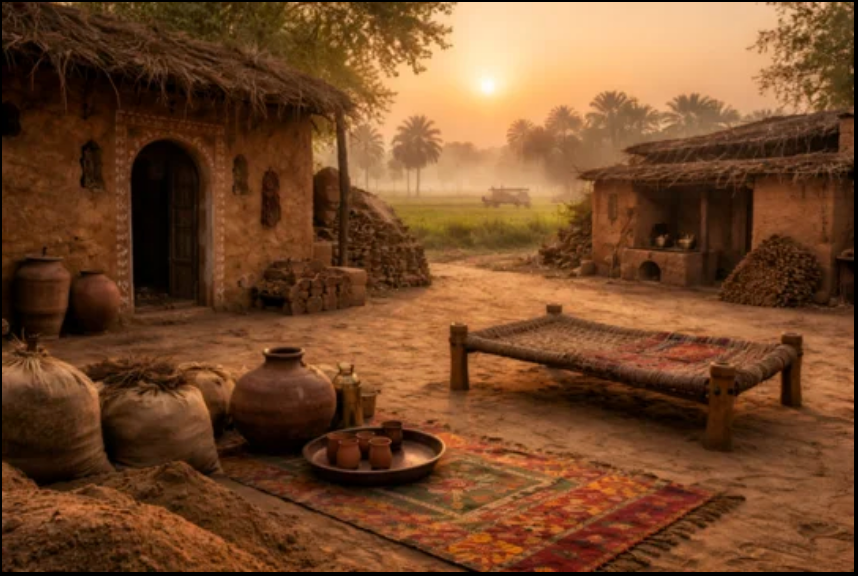
Once the walls and roof of a Tiv sleeping hut were complete, the wife took responsibility for making the interior livable. She began by setting up the atse, the three-stone hearth for cooking. She arranged three large head-sized stones in a triangle in the centre of the hut, supported them with sand, and sometimes added a fourth stone for soup. A skilled woman would coat the stones with mud to give the hearth a neat, attractive finish.
Next came the ima water-pot stand. A diligent wife built a proper raised, oblong stand with hollows to securely hold the pots, complete with a stake nearby for hanging the dipper. Less patient women simply used three stones on the ground, but a high-status woman took pride in a well-crafted stand.
She then installed the alaga utensil rack. Using rope made from ichen grass (since raffia was unknown at the time), she created a hanging rack suspended from the rafters on the right side of the entrance, the traditional side for water storage.
The husband then contributed the dzaar wooden platform in the centre of the house. He cut four forked posts as pillars, added straight beams, and laid slender rods across them for the flooring. Beneath this platform hung the isha-segh drying rack, plaited from thin rods and grass rope for drying items indoors.
Finally, he crafted the katsor door shutter from dried slender sticks plaited together with grass rope. Originally called chivir hunda (“dignified door”), it was hung on the left side of rectangular houses and secured with a locking stick from inside.
These carefully placed household items transformed a simple mud hut into a warm, organised family home, reflecting the division of roles and pride in craftsmanship that defined traditional Tiv life.
The husband then contributed the dzaar wooden platform in the centre of the house. He cut four forked posts as pillars, added straight beams, and laid slender rods across them for the flooring. Beneath this platform hung the isha-segh drying rack, plaited from thin rods and grass rope for drying items indoors.
Sleeping Practices and Family Life
Families followed specific sleeping customs that emphasised protection, closeness, and hospitality. Before proper beds existed, people slept on oblong mud platforms or clustered logs. Later, they built low beds using four forked sticks set in a rectangle behind the door shutter. Poles formed the base, creating a sleeping space wide enough for two adults.
Couples observed a protective order: the wife slept closest to the wall, while the husband slept beside her, shielding her. A nursing baby was placed between them; an older child slept next to the mother against the wall. This arrangement kept the family safe and together.
The head of the family relaxed with his favourite wife and guests in the ate, hosted beer drinking, dances, and stored millet on elevated platforms.
These sleeping and relaxation practices highlighted the Tiv values of family unity, protection, and communal living in the traditional home.
Outdoor Structures: The Ate, Tsum, and Granaries
Yam seed shelters were converted from old sleeping tents or built separately. One type stored harvested yams near the sleeping hut for security; another kept seeds at the farm or backyard. In ancient times, stealing yam seeds was taboo, as it was believed stolen seeds would ruin both themselves and other planted yams.
These outdoor structures supported daily life, food security, and social gatherings, showing the Tiv’s practical approach to living in harmony with their environment.
The Smithy and Traditional Working Implements
The smithy, called
ate-iwa, was a simple, unadorned shelter located in the backyard to reduce fire risk. Its basic design has changed little since the Tiv began working with iron. Inside, the blacksmith kept essential tools: bellows, tongs, hammers, rakes, anvils, clay furnace nozzles, water troughs, and smith pots. Hoes and axes brought for repair were also stored there.
In the past, the smithy held spiritual significance. Children accused of stealing had to swear an oath on the forge. An innocent child would boldly say, “That person’s forge is evil,” while the guilty remained silent. Over time, this practice lost its power, and fear of the smithy’s spiritual retribution faded.
In Conclusion
Early Tiv working implements were limited. They used excavation rods, hoes, machetes (obtained from the Udam), and axes (from the Umbu clan of the Udam, now known as Etulo). The simple ikpe hoe was made by fixing a flat wooden board onto a forked gbaaye tree branch and securing it with vines. Though basic, it served farming needs effectively and is still used by some subgroups like the Ikyurav South.
The modest smithy and early tools reflect the Tiv’s resourceful beginnings in craftsmanship and agriculture, relying on locally available materials and knowledge passed down through generations.